Why Spokeshave?
When I was deciding on a name for my business, I wanted something that reflected both what I make and how I make it. Spokeshave Handmade Furniture felt right from the beginning — a name that connects directly to the tool that means the most to me in my workshop: the spokeshave.
A Simple Tool with Endless Possibility
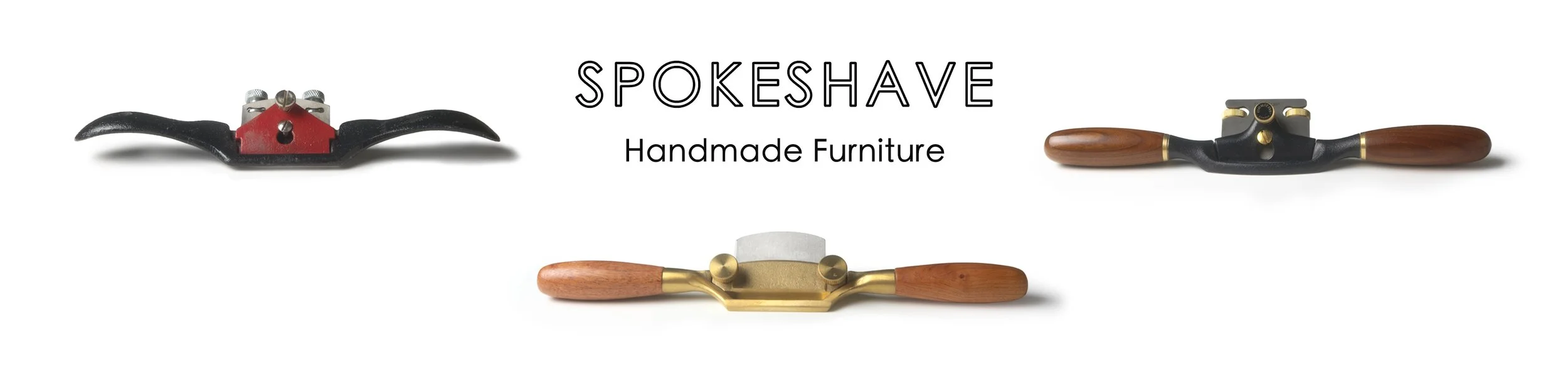
A spokeshave is a small hand tool with a blade set between two handles. It’s traditionally used to shape and smooth wood, especially curves — the kind you find on chair legs, stool tops, and edges that need to feel good in the hand.
It’s not a fast tool, but that’s part of the appeal. You guide it by feel, adjusting pressure and angle as you go. With a sharp edge and a bit of rhythm, it leaves behind a smooth, clean surface that doesn’t need sanding. There’s something incredibly satisfying about that — it’s quiet, precise, and deeply connected to the material.
Why It Matters to Me
The spokeshave represents what I enjoy most about making furniture: the balance between control and flow. It’s not about forcing the wood into shape but working with it, reading the grain, and letting the form emerge naturally.
Every stool leg I make passes under a spokeshave at some point — refining tapers, rounding edges, or adding those subtle details that only hand tools can achieve. No two pieces ever feel exactly the same, and that’s what gives them life.
A Symbol of Handmade Craft
For me, the spokeshave isn’t just a tool; it’s a symbol of handmade work done with care and intention. It connects me to generations of furniture makers who relied on simple, effective tools to shape wood beautifully.
Naming my business after it felt like a quiet nod to that tradition — to the idea that modern furniture can still be made by hand, one shaving at a time.
Craft, Care, and Character
At its core, Spokeshave Handmade Furniture is about the same principles the tool embodies: precision, patience, and touch. Every curve, joint, and surface is shaped to feel right — not just to look good.
It’s a reminder that in a world of machines and mass production, there’s still value in slowing down, feeling the material, and taking the time to get it right.