Why I Use Danish Cord — A Material with History and Heart
There’s something special about a material that’s both humble and beautiful — simple in appearance, but rich in tradition and craftsmanship. Danish cord is exactly that. It’s been a hallmark of Scandinavian furniture design since the 1940s, and it remains one of my favourite materials to work with today.
A Material with a Story
Danish cord was first developed during wartime, when natural materials like rattan were hard to come by. Made from twisted paper fibre, it offered a practical alternative that turned out to be exceptionally strong and versatile. Designers like Hans Wegner helped make it iconic — using it in chairs that balanced lightness, comfort, and enduring style.
Despite its modest beginnings, Danish cord has stood the test of time. It continues to be used in high-end furniture across the world, valued for its strength, texture, and timeless aesthetic.
Strength and Comfort in Every Strand
Although it’s made from paper, Danish cord is surprisingly strong. Each length is tightly twisted and woven under tension, creating a seat that’s both firm and flexible. The weave naturally supports weight evenly, giving a level of comfort that doesn’t require padding or upholstery.
Over time, it develops a soft patina — the cord lightens slightly and the surface smooths, adding to its natural character. It’s one of those rare materials that gets better with use, not worse.
Handwoven by Me, One Seat at a Time
Every Danish cord seat I make is woven by hand in my workshop. It’s a slow, methodical process — threading and tightening each cord in a specific pattern that locks everything in place.
It takes patience, but it’s one of the most satisfying parts of my work. There’s a rhythm to it, and a quiet beauty in seeing the structure take shape. Each weave pattern not only looks distinctive but also contributes to the strength and longevity of the finished piece.
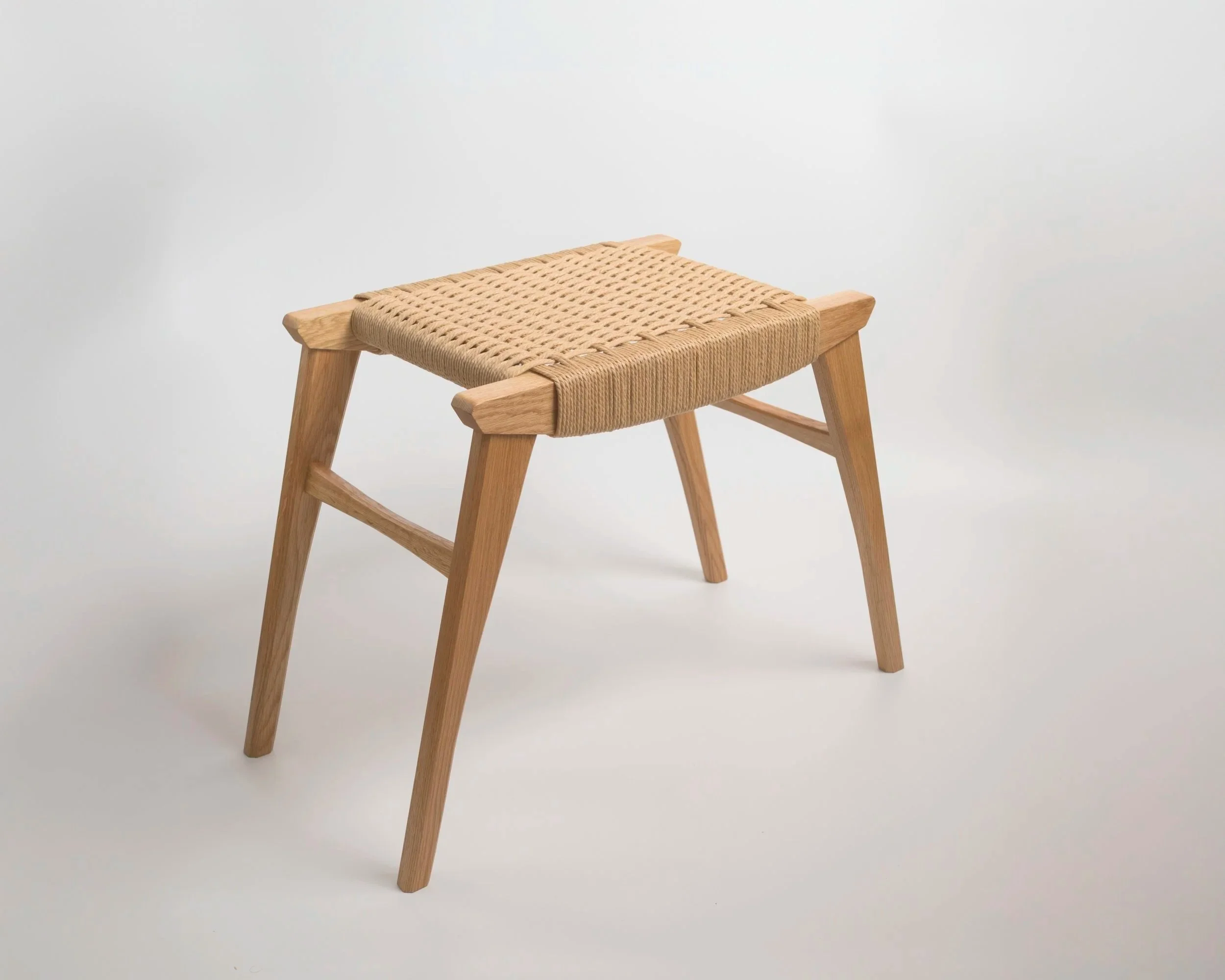
Designed to Last
When paired with solid wood — oak, ash, or walnut — Danish cord brings a sense of warmth and texture that complements clean, modern design. It’s tactile, natural, and feels timeless.
Just like the rest of my furniture, these stools and benches are built using traditional joinery, designed to be used every day and last for decades.
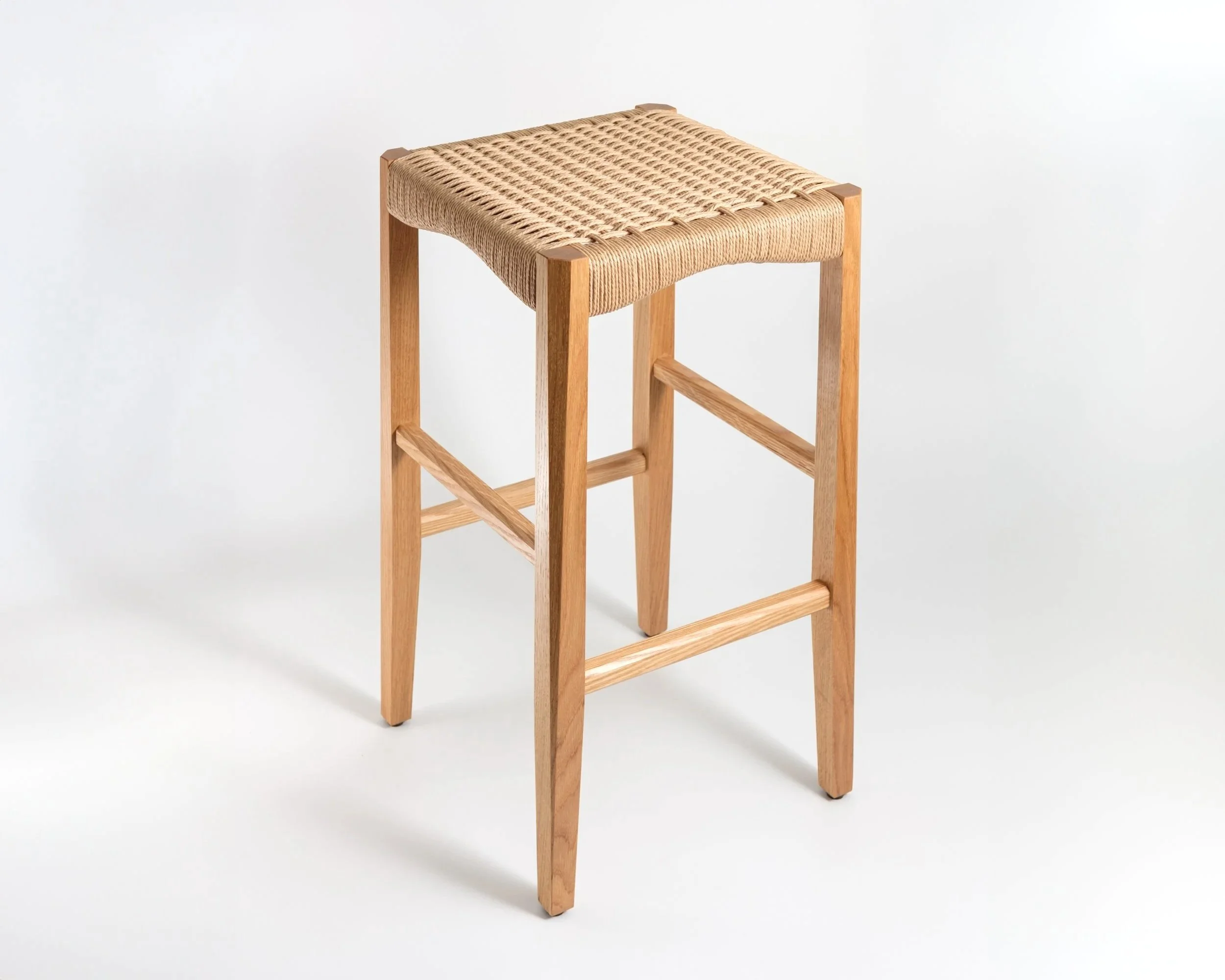
A Material with Heart
For me, Danish cord represents the best kind of design — beautiful, functional, and honest. It connects my work to a long tradition of craftsmanship while adding something soft and human to modern interiors.
If you’d like to see more, take a look at my Danish cord stools — each one handmade to order, with custom heights and finishes available.